
⚡ Key Takeaways
- ✓AI character inconsistency (faces changing, proportions shifting) is a common problem in AI art generation.
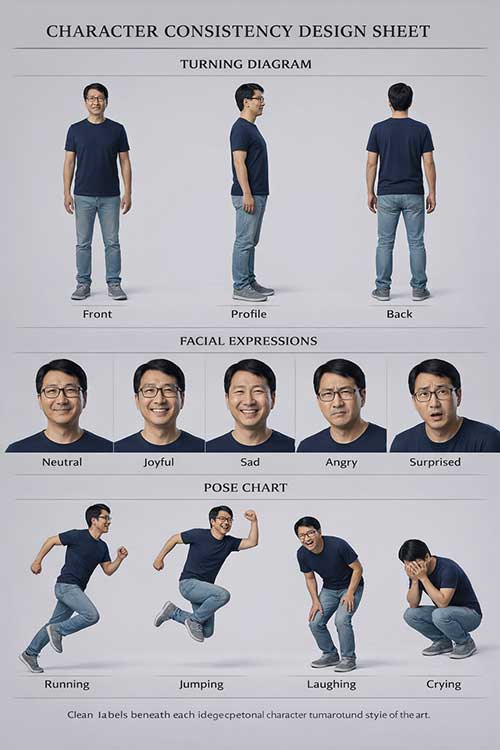
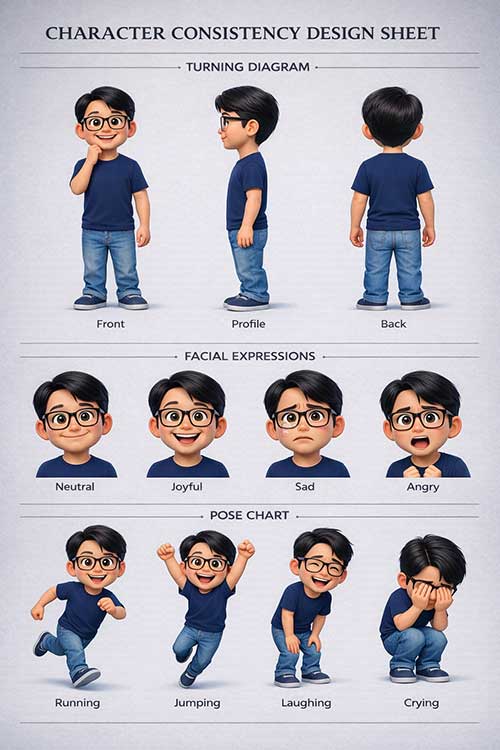
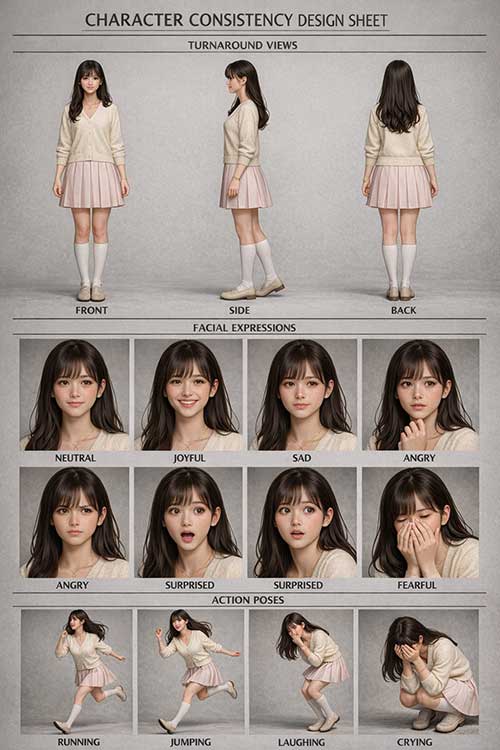
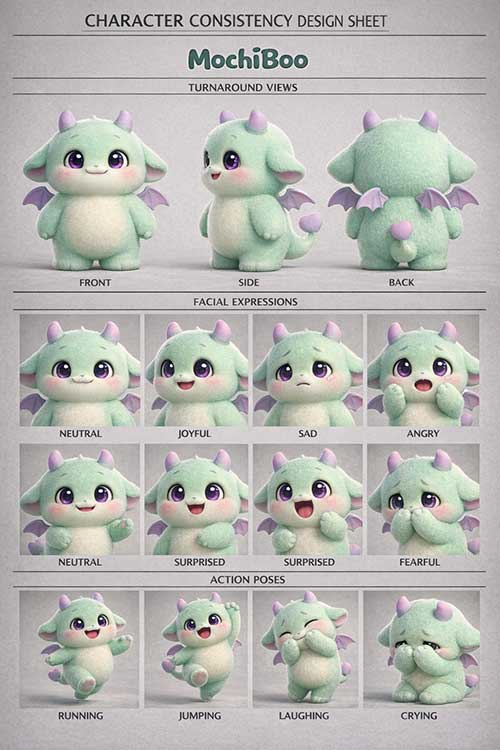
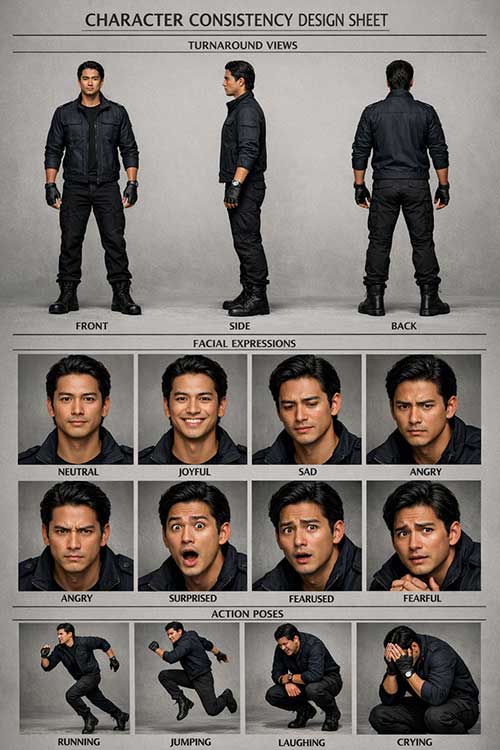
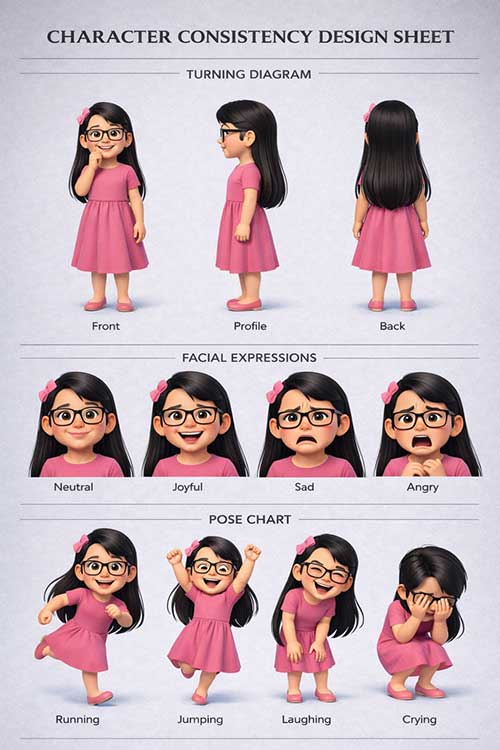
- ✓A ‘Character Consistency Design Sheet’ is a structured prompt framework that ensures visual stability for AI characters across various views and expressions.
- ✓Effective design sheets include turning diagrams, facial expression sheets, and action pose sheets, mimicking professional animation workflows.
- ✓To achieve consistency, define character details once and explicitly instruct the AI to maintain identical features, proportions, and outfit details across all sections.
- ✓By using this structured approach, you can create AI characters that maintain a cohesive visual identity, moving from random variations to studio-level quality.
Mastering AI Character Consistency: Your Guide to Stable Designs with Design Sheets
Alright, fellow creators! Have you ever made a truly amazing AI character, only to see their face change or their outfit magically redesign itself in the very next picture? It’s a bit like trying to catch smoke, isn’t it? You’re definitely not alone in this. This ‘character inconsistency’ is one of the biggest headaches when we’re designing characters with AI.
But guess what? There’s a clever solution, and it’s called a Character Consistency Design Sheet Prompt. Think of it as a special blueprint for your AI. It’s a structured way to write your prompts that forces your character to look the same, whether they’re smiling, running, or viewed from the side. This guide will show you exactly how to build one, how to write the perfect prompt, and how you can easily tweak just one part to create new characters while keeping everything else super stable.
What Is a Character Consistency Design Sheet?
A Character Consistency Design Sheet is a structured layout that presents a character in multiple views and emotional states while maintaining:
- Identical facial features
- Identical body proportions
- Identical outfit details
- Consistent color tones
- Stable design accuracy
It typically includes:
- Turning diagram (front, side, back views)
- Facial expression sheet
- Action pose sheet
This format is widely used in professional game development, animation, and character production pipelines because it eliminates guesswork and ensures visual continuity.
Why Most AI Character Prompts Fail
Most prompts are written like this:
“Create a cool anime martial artist girl in black outfit.”
The result? Every panel looks like a slightly different person.
AI models need structural constraints. If you don’t explicitly instruct consistency, variation will happen.
The key principle:
Describe once. Lock it across all sections. Repeat consistency rules clearly.
The Professional Prompt Framework
Below is a structured master prompt template. Your readers only need to change the Character section.
Professional character design sheet titled “CHARACTER CONSISTENCY DESIGN SHEET” prominently displayed at the top center.
Character: [USER EDITS ONLY THIS SECTION]
SECTION 1 – Turning Diagram:
Front, side, and back full-body views in neutral relaxed standing pose.
Maintain identical facial features, hairstyle, body proportions, and outfit across all views.
Perfect alignment. Clean white background. Studio lighting.
SECTION 2 – Facial Expressions:
6 close-up portraits (head and shoulders):
Neutral | Joyful (broad smile) | Sad (tear on cheek) | Angry (furrowed brows) | Surprised (wide eyes, open mouth) | Fearful (apprehensive eyes).
Maintain identical facial structure, skin tone, hairstyle, and outfit details.
SECTION 3 – Action Poses:
Running dynamically | Jumping mid-air | Laughing (bent slightly) | Crying (crouching, hands covering face).
Ensure perfect character consistency across all panels.
No variation in body shape, proportions, facial features, or color tones.
Ultra-detailed AAA JRPG render quality.
High resolution.
Sharp linework.
Modern fantasy combat design.
Clean professional presentation.
Example Character Section (Pre-Filled)
Ultra-detailed AAA JRPG female martial artist character inspired by modern high-budget Japanese RPG aesthetics.
Full-body render. Athletic build with toned but feminine proportions. Confident stance.
Long dark hair flowing naturally with subtle wind motion.
Sharp expressive eyes with realistic iris detail.
Modern fantasy combat attire:
Black fitted crop combat top, reinforced leather gloves,
High-waisted tactical skirt with side slits,
Thigh straps,
Knee-high combat boots with metal accents.
Subtle red accent details.
Functional but stylish design.
No excessive armor.
Notice the clarity:
- Body type defined
- Hair length and motion defined
- Outfit broken into structured elements
- Color accents controlled
- Armor weight specified
This level of specificity reduces randomness.
How to Write a Strong Character Description (Beginner to Pro Guide)
If your readers want to replace the character section, guide them using this formula:
1. Define the Archetype
Examples:
- Martial artist
- Cyberpunk hacker
- Desert assassin
- Sci-fi sniper
- Fantasy knight
2. Define Body Structure
Be specific:
- Athletic and toned
- Slim but muscular
- Tall and lean
- Petite with compact build
Avoid vague words like “beautiful” or “cool.”
3. Define Hair Clearly
Include:
- Length
- Color
- Texture
- Movement
Example:
Long silver hair tied in a high ponytail with subtle wind motion.
4. Define Eyes Precisely
Mention:
- Shape
- Intensity
- Detail level
Example:
Sharp almond-shaped eyes with high-detail reflective iris texture.
5. Define Outfit Structurally
Instead of:
Black combat clothes
Use:
Matte black fitted tactical jacket with reinforced stitching, armored shoulder padding, slim combat pants with utility straps, and heavy combat boots with steel accents.
The more modular the description, the more stable the result.
How to Ensure Perfect Character Consistency
Consistency is not automatic. You must command it.
Always include phrases like:
- Maintain identical proportions across all panels
- Locked facial structure
- No variation in design
- Identical hairstyle and outfit details
- Consistent lighting
- Model sheet accuracy
Repetition strengthens constraint.
Common Mistakes That Break Consistency
❌ Changing pose without restating identity lock
If you move from neutral pose to action pose without reinforcing identity consistency, AI may adjust proportions.
❌ Adding new descriptive details later
If Section 3 introduces new clothing details not mentioned in the character section, the design may evolve.
❌ Mixing art styles
Avoid adding:
- “realistic photo style” in one section
- “anime cel-shading” in another
Pick one visual direction and keep it consistent.
Why This Works Especially Well for AAA JRPG Characters
Modern high-budget Japanese RPG aesthetics typically include:
- Clean silhouette readability
- Layered but functional outfits
- Subtle accent colors
- Stylized realism
- Expressive anime facial rendering
By structuring the prompt like a professional model sheet, you simulate a studio production workflow rather than random image generation.
That is why results become significantly more stable.
Frequently Asked Questions
How do I keep my AI character consistent across multiple images?
Use a structured design sheet prompt that locks facial features, body proportions, outfit details, and lighting across all sections. Always repeat consistency instructions.
What is a character turnaround sheet?
A turnaround sheet shows front, side, and back views of a character in a neutral pose. It ensures animators, modelers, and illustrators maintain accurate proportions.
Why does my AI character change face in every pose?
Because the prompt does not explicitly command identity stability. You must clearly instruct identical facial structure and proportions across all panels.
Final Thoughts
A Character Consistency Design Sheet is not just a prompt. It’s a production blueprint.
Instead of generating isolated character images, you’re building a controlled visual identity system.
When structured properly:
- Faces stop changing
- Body proportions stay locked
- Outfits remain accurate
- Expressions feel authentic
- Action poses remain believable
And most importantly — your character finally feels like one cohesive creation instead of multiple variations.
If you apply this framework correctly, your AI character designs will move from casual experimentation to studio-level presentation quality.
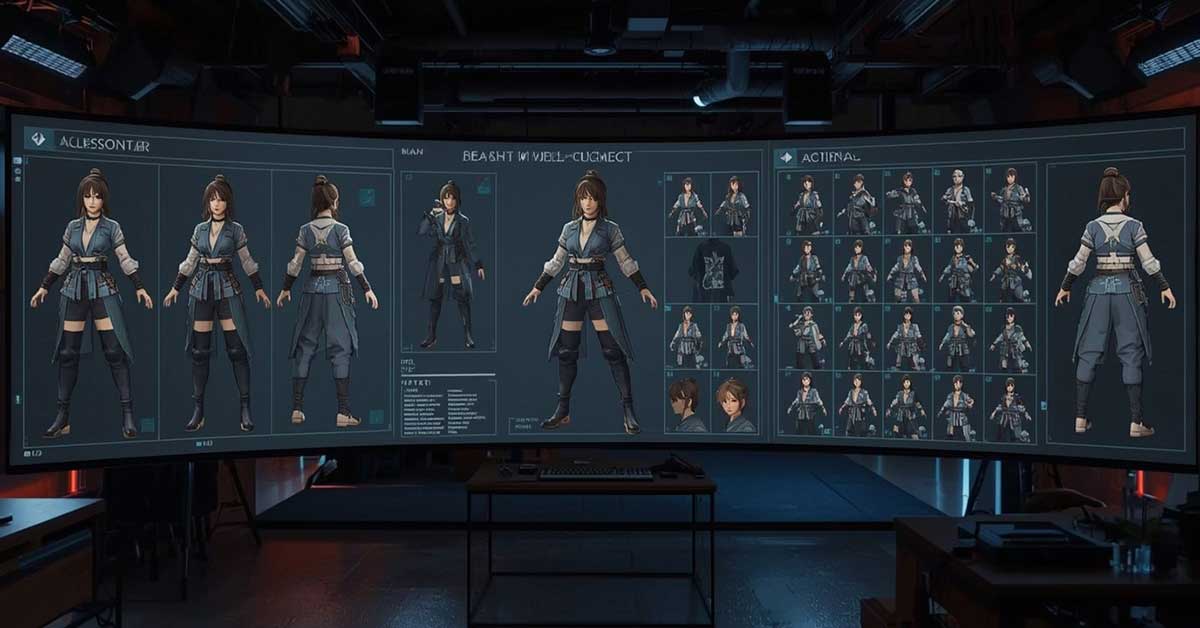
Sample image generated